What no KYC means for crypto swaps, and what it leaves unanswered
No ID at the start does not settle later checks, custody or refunds. Learn how to read a swap policy before sending funds.
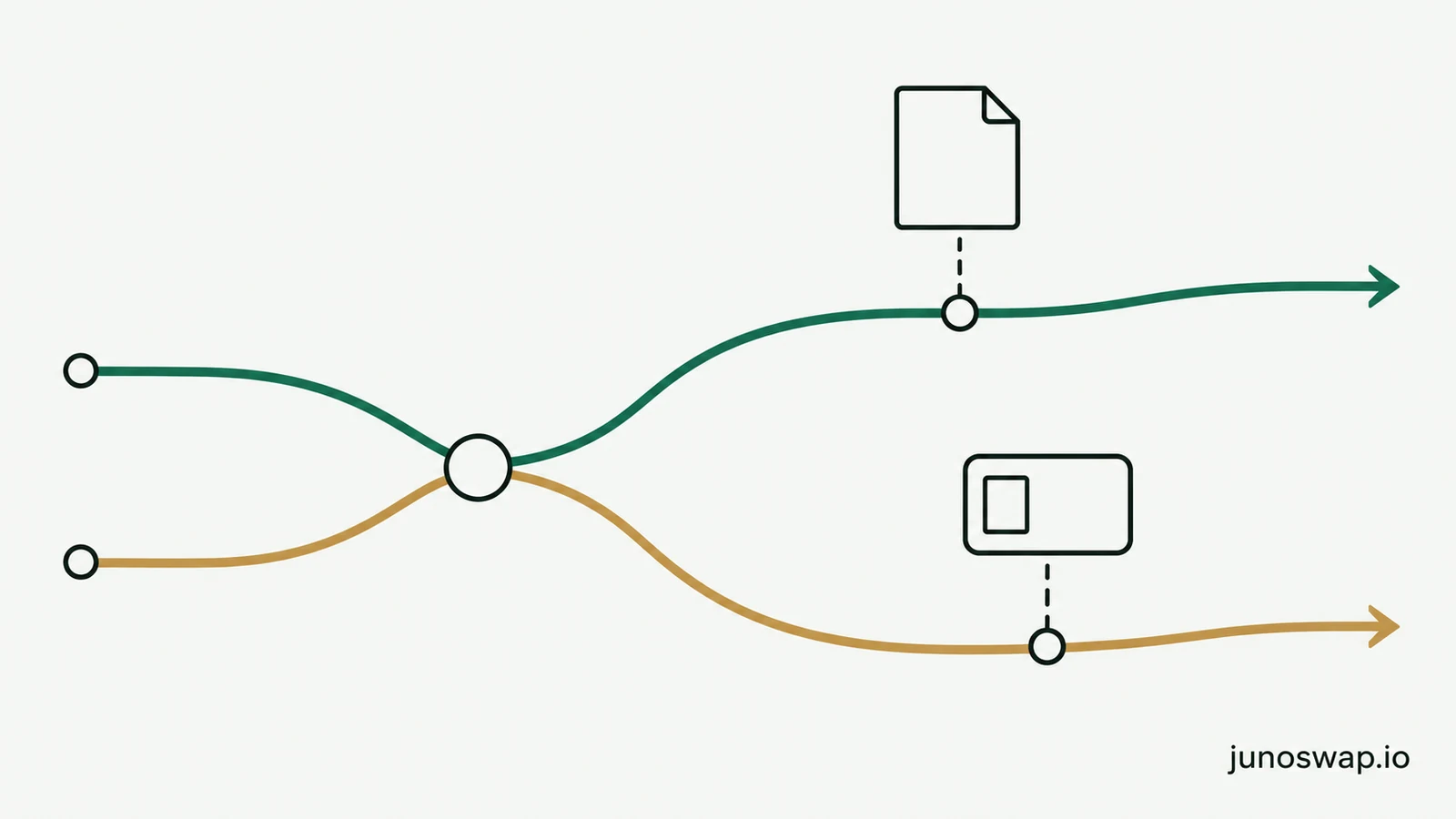
“No KYC” describes a claimed verification process, not everything that can happen to your money. A service may let you create an order without uploading identification while reserving the right to ask for documents after receiving the deposit. Before sending, establish when checks can happen, who controls the funds and what the terms say about refusing a request.
That order matters. A reader can spend an hour comparing prices and still miss the condition that determines whether they can complete the transaction. A convenient opening screen tells you about the opening screen. The rest of the route needs its own evidence.
Start with the policy, not the absence of a form
KYC means “know your customer”. In this context, it usually refers to a service identifying and verifying a customer. The documents, timing and scope depend on the provider and applicable rules. A general guide cannot establish which law governs your circumstances or whether a particular service may accept you.
Account registration is a separate question. An email address may create an account without verifying identity. Conversely, a transaction that starts without an account may later require identification. A wallet connection establishes a technical relationship with an interface; it does not answer whether another participant in the route can request personal information.
Source-of-funds checks ask where money used in a transaction came from. They are not the same question as who you are. Address screening concerns information associated with blockchain addresses or transaction histories. A provider can combine these processes, but combining their names into one “KYC” field makes a comparison less useful.
The practical question is therefore specific: what information can this provider require from this customer, for this route, before funds are released? If the documents do not answer that question, keep the uncertainty visible rather than filling it with an optimistic assumption.
Read four labels as four different statements
Juno Swap uses four policy classes. ID required means identity verification is required before using the service. Conditional ID means routine use may not require identification, but the terms allow checks when a transaction is flagged. Provider claims no ID records an explicit provider claim; it does not convert the claim into a promise by Juno Swap. Unknown means the position is unclear, conflicting or dependent on a partner or counterparty.
Silence belongs in the last category. A homepage that never mentions identification is not equivalent to a policy saying identification is never requested. An unreadable policy, a missing document and two contradictory documents also leave different gaps. Explain the gap so that another reader can see what would resolve it.
These labels do not rank services from good to bad. A clear upfront requirement may be more predictable for a particular reader than an unclear later requirement. Equally, a plainly described conditional process still needs a refusal and refund explanation. Policy timing and policy clarity are related, but they are not interchangeable.
A label can also be narrower than the whole brand. Different transaction routes may involve different execution partners. A page describing crypto-to-crypto swaps does not automatically establish the policy for buying with a card. Read the conditions for the actual operation rather than borrowing a statement from a neighboring product.
Follow the money through the complete route
Begin at the wallet or account that will send the asset. Identify the deposit recipient, the party executing the exchange and the destination where the resulting asset will arrive. These may be different participants. A comparison interface may display a quote while another provider receives and exchanges the funds.
Next, mark the points where you stop controlling the asset directly. Sending to a provider-controlled deposit address can create a period of provider custody even if the output goes to your own wallet. “Settles to your own wallet” describes the destination. It does not establish continuous control throughout the swap.
Finally, examine the return route. If the order cannot complete, which asset would be returned, on which network and to which address? Who authorizes that return? Are fees deducted? Is verification still required before a refund? A policy that describes only successful settlement leaves these questions unanswered.
You do not need to infer a hidden problem from every omission. You do need to recognize that an omission is not evidence of a favorable outcome. When an essential condition remains unclear, postponing a deposit is a complete decision, not a failure to finish the comparison.
Why a check can appear later
Providers may reserve checks for transactions that meet their review criteria. A request can concern identity, transfer information or the source of funds. The applicable reasons and procedures depend on the service, the route and the jurisdiction; there is no universal amount below which every transaction avoids review.
The FATF overview of virtual assets explains the international standards context for virtual-asset service providers. National implementation and the facts of a transaction determine the applicable duties. A marketing phrase cannot establish an exemption from those duties.
It follows that an earlier successful order is limited evidence. It shows what happened in that order, under its circumstances. It does not establish that the next order will follow the same path or that the policy has remained unchanged. A screenshot of an old transaction is not a substitute for current terms.
This is also why splitting transactions or changing the information you supply is not a legitimate solution to a policy mismatch. The useful decision is whether you can lawfully meet the applicable requirements and accept the documented conditions before committing funds.
No identification upload is not anonymity
Public blockchain activity can leave a transaction record. Whether an address is associated with a particular person is a separate question, but the absence of an identification upload does not remove that record. Information from counterparties, account activity or a later disclosure can change what an observer can infer.
Privacy also depends on the asset and protocol. A privacy-focused network has different transaction properties from Bitcoin or a public smart-contract network. Those differences do not justify a universal claim that activity is impossible to trace. Nor do they control what a service learns directly from your communications with it.
Separate three questions when evaluating a route: what the network reveals, what the provider collects and what your own device or communications disclose. Improving one of these does not automatically resolve the others. A provider's privacy policy should be read alongside its identity and refund policies, not treated as a decorative document.
Avoid sending unnecessary personal material while researching. Juno Swap never needs your wallet address, identity documents, private keys or recovery phrase. An editorial question can normally be explained with a page link and a description of the statement that needs checking.
A hypothetical comparison that changes the decision
Imagine three unnamed services. Service A lets a visitor create a quote without an account, but its terms reserve identity checks after a deposit. Service B requires verification before accepting an order. Service C explicitly states that it does not request identification. These are hypothetical descriptions, not findings about real providers.
Service A fits Conditional ID on the information given. Service B fits ID required. Service C's statement supports Provider claims no ID, with attribution. None of those classifications tells you the final payout, the custody model, whether a refund has been tested or whether the service may accept you where you live.
Now add a missing fact: Service A does not explain whether it returns funds when a customer refuses identification. That uncertainty may be more important to the reader than a slightly better quote. Service B's earlier check changes when the customer makes the disclosure decision. Service C still needs evidence about execution and funds access.
The comparison becomes useful when each question stays separate. It becomes misleading when the interface compresses all three services into a single “no KYC” badge and lets the reader assume the rest.
A practical reading sequence before sending
First confirm the asset pair, network and service type. A coin ticker alone does not establish the route. Then read the current terms, AML or KYC policy and privacy policy. Check whether the same operator and product are covered across those documents.
Record the identity requirement, any later-check clause, the executing provider and the refusal or refund process. If a partner is involved, establish which document governs that partner's part of the transaction. Do not assume a comparison site's description overrides the executor's terms.
Check eligibility separately. The fact that a website loads in your browser does not establish permission to use the service. If eligibility is unclear, resolve it through the provider's official information or qualified advice appropriate to your circumstances.
Only then compare cost and rate mode. Keep a private copy of the order conditions relevant to your decision. Do not publish personal transaction records or send them to an unrelated publication. The goal is an accurate record for your own use, not a public trail of sensitive information.
If the terms conflict, ask a narrow written question through the official support channel. For example: does this route permit identity checks after receipt, and what happens if the customer declines? A response that repeats a slogan without addressing the question does not fill the gap.
Use evidence labels without giving them extra meaning
Juno Swap's Policy checked stage means current policy documents were read on a stated date. It does not mean money was sent. Interface inspection, quote sampling, a completed funded trade and a refund test are separate evidence stages with different scopes.
A quote sample can support a statement about an observed quote at a recorded time. A completed trade can support an account of that trade. Neither establishes that a future check is impossible. Keeping these distinctions visible prevents a small piece of evidence from carrying a much larger claim.
See how Juno Swap evaluates evidence, then use the guide to conditional checks and paused swaps for the next decision. The comparison of instant exchanges, DEXs and P2P platforms explains why the party controlling funds matters as much as the label on the homepage.
Questions readers ask
Does no account mean no identity check?
No. Account creation and identity verification are different processes. Check whether the terms permit a request during an order, even when the first screen asks only for transaction details.
Can a service ask for ID after a successful previous swap?
An earlier outcome does not establish the conditions for a later order. Read the current policy and the conditions for the specific route. Do not interpret a personal history of successful transactions as a permanent exemption.
Is an explicit no-ID claim enough to decide?
It answers one question about what the provider claims. You still need evidence about custody, execution, refunds, costs and eligibility. Attribute the claim rather than presenting it as an independently established future outcome.
What should I do when the documents disagree?
Treat the relevant policy as Unknown until the contradiction is resolved. Ask for clarification before depositing. A general reassurance is less useful than a written answer identifying which rule applies to your route.