How to choose the correct network for a crypto swap
Match the asset, network and receiving instructions before sending, including USDT deployments, native fee assets and memo requirements.
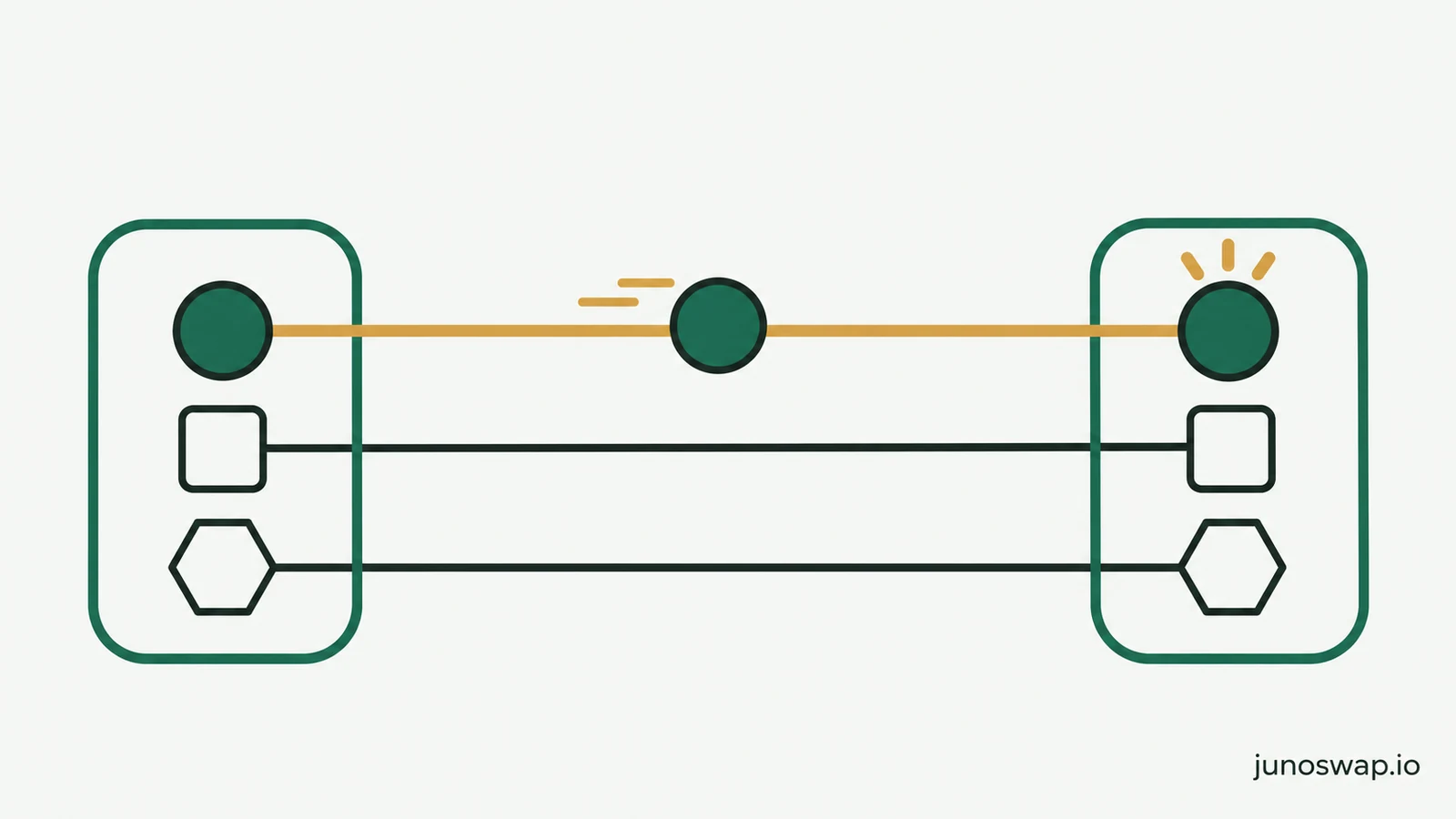
Choose a transfer network only after both the sender and the recipient explicitly support the same asset on that same network. A matching ticker is insufficient. USDT on Ethereum and USDT on Tron are separate network deployments, and a receiving account that supports one does not automatically credit the other.
The receiving instructions are the starting point. Open the destination's current deposit flow, select the asset and network, then match those choices on the sending side. If you cannot establish a match, stop before broadcasting. A blockchain transfer can be irreversible, and recovery from a wrong-network transfer may be impossible.
Three details that belong together
An asset name describes what you intend to transfer. A network describes where the transfer occurs. A token contract or other network-specific identifier distinguishes a particular representation where relevant. Treat these as a connected set rather than three optional details.
For example, a ticker such as USDT does not uniquely describe the transfer route. The issuer's supported-protocol documentation distinguishes deployments across networks. That documentation helps identify the asset, but it does not establish that your receiving wallet, exchange or swap provider accepts every listed deployment.
A recipient can support a network while supporting only selected tokens on it. It can also support an asset while limiting deposits to particular networks. Both conditions must be satisfied. “The address looks compatible” is not a substitute for an explicit deposit instruction.
Wrapped and bridged assets add another distinction. A token representing an asset through a bridge is not automatically interchangeable with the native asset or another representation bearing a similar name. Check the precise asset identifier and the route accepted by the destination.
Start at the destination and work backward
Open the receiving wallet or account through its official interface. Select the intended asset and inspect the available deposit networks. Note any minimum amount, confirmation requirement, memo instruction or restriction shown for that route. Those conditions belong to the recipient, not to a generic description of the blockchain.
Now inspect the sending wallet or withdrawal interface. Select the same network explicitly. If the sender does not offer the network the recipient accepts, you do not have a matching route. Choosing a cheaper network with a similar name does not solve the mismatch.
Copy the destination address from the current receiving instructions and compare it with the address shown in the final confirmation screen. Check more than a few characters when practical. A clipboard substitution or a mistaken saved address can produce a valid-looking destination that is not the intended one.
If a memo or tag is required, copy it as a separate field and verify it independently. Do not place a memo into the address field or assume that a note typed in an unrelated message box will travel with the transfer in the required form.
Why address appearance can mislead
Some networks and applications use similar address formats. Ethereum-style addresses beginning with 0x are also used in other EVM-compatible environments. The prefix therefore does not uniquely identify Ethereum mainnet or prove which network a receiving service monitors for a deposit.
Bitcoin also has multiple address formats. A particular prefix can help identify an address type, but it does not prove ownership, recipient eligibility or support by every sending interface. Validate the address through the wallet and the recipient's instructions rather than reducing the decision to a memorized prefix.
Tron commonly displays base58check addresses beginning with T. Solana uses base58-encoded public keys. These visual distinctions can help catch an obvious mismatch, but they do not establish that a particular token is accepted or that the address belongs to the intended recipient.
A valid address is a technical property. A correct destination is a practical conclusion requiring the right network, asset, owner and receiving instructions. Keep those two ideas separate when reviewing a transfer.
USDT on Ethereum and Tron: the practical difference
ERC20 and TRC20 describe token standards in different network environments. They are not two fee settings for a single universal USDT transfer. Selecting one determines where the transaction will be processed and which receiving infrastructure must recognize it.
For a self-custody transaction on Ethereum, network fees are paid in ETH. On Tron, resource accounting involves Bandwidth and Energy, with TRX relevant when the required resources are not otherwise available. The actual cost depends on the transaction and current conditions; no fixed fee quoted in a generic article should replace the wallet's current information.
Do not assume that holding USDT gives the wallet every asset or resource needed to send it. A token balance and the ability to pay for the network operation are separate matters. A custodial platform's withdrawal interface may handle these costs differently, so distinguish platform charges from the network's own mechanics.
Likewise, do not assume that the route with the lower apparent fee is suitable. If the destination accepts only the other deployment, the cheaper unsupported route does not reach the intended destination in a usable form. Compatibility comes before price comparison.
Confirmations and finality are not interchangeable labels
After broadcast, a transaction may pass through several network and application states. A wallet can show that a transaction was submitted before a receiving platform considers the deposit ready to credit. The platform's required confirmation level is an additional condition, not proof that the earlier status was false.
Bitcoin recipients may wait for a specified number of confirmations. That number is a recipient policy, not a universal rule for every transfer. Network conditions and the transaction's fee choice can affect inclusion, so a general guide should not promise a completion time.
Solana distinguishes commitment states such as processed, confirmed and finalized. These terms should not be collapsed into an identical meaning. The recipient may use a particular state for crediting, and its interface should explain the relevant requirement.
When investigating a delay, record the network status and the provider's deposit status separately. A transaction visible on a block explorer can still be awaiting the recipient's confirmation threshold or internal processing. Conversely, visibility on the wrong network does not establish a valid deposit on the intended route.
When a memo or tag matters
Some receiving systems require additional information to associate a transfer with the correct customer or deposit purpose. Whether that information is necessary depends on the asset, network and destination. A universal statement that every transfer needs a memo would be wrong, as would a statement that a wallet address is always sufficient.
Read the specific receiving instructions. If they provide a required memo or tag, treat it as part of the destination. If the sending interface cannot carry the required information in the correct way, do not improvise by adding it to an unrelated field.
Solana supports memo-related functionality, and some token-account configurations can impose memo requirements. That does not mean every SOL or token transfer requires one. The destination's actual setup determines the practical instruction.
Do not reuse a memo merely because it worked for a previous recipient. A memo can identify a particular account or purpose. Saved withdrawal details should be rechecked against the current destination rather than treated as permanently correct.
A hypothetical mismatch and a correct route
Suppose a receiving account offers USDT deposits on Ethereum only. The sender offers both Ethereum and Tron, with a lower displayed withdrawal charge on Tron. Selecting Tron would not satisfy the receiving instruction, even though both menus display USDT.
The correct next action is to use the matching supported route or decide not to proceed. If another route is being considered, it must be evaluated as a separate transaction with its own costs, custody and eligibility conditions. Do not assume an unsupported deposit will be automatically converted.
Now suppose the recipient supports both networks. The comparison can proceed, but the sender must still choose the matching address and any route-specific instructions. The same supported asset list does not eliminate the need to check the final order screen.
A small lawful test transfer can reveal whether a particular route credits as expected, but it introduces its own fees and does not prove future policy or execution. Check minimums first. An amount below the recipient's minimum may not provide the evidence the sender expects.
If a transfer has already gone wrong
Stop sending additional transfers until the situation is understood. Record the network, asset and transaction identifier privately. Confirm what was actually broadcast rather than relying only on the intended choices or a remembered screen.
Contact the recipient through its official support process and ask whether it can identify the transfer and whether any recovery process exists. A custodial recipient may control relevant infrastructure, but that does not establish that recovery is technically possible, supported or available without conditions.
Do not import a seed phrase into a website recommended by an unsolicited helper. Never provide private keys to a person claiming they can “synchronize” the missing deposit. A recovery claim requires its own scrutiny; urgency does not establish legitimacy.
If the recipient describes a recovery process, ask about requirements, costs and limitations in writing. Treat the outcome as uncertain until it occurs. This guide cannot promise that a valid transaction on an unintended network can be reversed or credited.
A final route check before broadcast
Confirm the asset and network at both ends. Check the exact representation or contract where relevant. Compare the address, memo or tag, deposit minimum, fee asset and the final amount. Review any quote expiry or required confirmation condition attached to the swap order.
Keep the provider's verification and custody terms in view as well. Technical compatibility does not determine whether a service may request documents or whether it may accept you where you live. A correct network prevents one class of mistake, not every possible transaction problem.
Use the Juno Swap methodology to distinguish policy review from funded evidence. The guide to total swap costs explains how network choices affect the comparison, while self-custody and swap risk follows control of the assets through the route.
Questions readers ask
Is the same ticker enough to identify a deposit?
No. Match the asset, network and accepted representation. A recipient can support a ticker on one network while rejecting or not crediting the same ticker on another.
Does a 0x address prove that I should choose Ethereum?
No. Similar address formats exist across multiple EVM-compatible networks. Use the recipient's explicit network instruction rather than the appearance of the address alone.
Do all Solana transfers need a memo?
No. Memo requirements depend on the receiving system and relevant account configuration. Follow the destination's specific instructions and do not invent a memo when none is requested.
Can support always recover a wrong-network transfer?
No. Recovery depends on technical control, supported procedures and the circumstances. It may be unavailable or unsuccessful. Verify the route before broadcast rather than treating support as a guaranteed fallback.